Tuesday, March 29, 2011

DTN News: U.S. Department of Defense Contracts Dated March 29, 2011

Asian Defense News:
DTN News: U.S. Department of Defense Contracts Dated March 29, 2011
(NSI News Source Info) WASHINGTON - March 29, 2011: U.S. Department of Defense, Office of the Assistant Secretary of Defense (Public Affairs) Contracts issued March 29, 2011 are undermentioned;

CONTRACTS

MISSILE DEFENSE AGENCY

The Missile Defense Agency is awarding a cost-plus-incentive fee modification to Raytheon Missile Systems Co., Tucson, Ariz., for contract N00024-07-C-6119, CLIN 0016, for $312,663,118. The modification is to manufacture 24 Standard Missile-3 Block IB missiles. The work will be performed in Tucson, Ariz. The period of performance is March 2011 through June 2013. Fiscal 2011 research, development, test and evaluation funds will be used to incrementally fund the modification for $47,826,087. The Missile Defense Agency is the contracting activity.

Raytheon Missile Systems Co., Tucson, Ariz., is being awarded a modification to decrease contract N00024-07-C-6119, CLIN 0004, by $72,306,105 from $229,900,477, to a new total value of $157,594,372. The modification is to reduce the quantity of Standard Missile-3 Block IA missiles manufactured, from 24 to 18. The remaining work will be performed in Tucson, Ariz. The performance period is from March 2011 through April 2012. The Missile Defense Agency is the contracting activity.

ARMY

The Engility Corp., Billerica, Mass., was awarded on March 24 an $84,181,310 cost-plus-fixed-fee contract. The award will provide for management, engineering, integration, logistical staff, and liaison support services for Program Executive Office Soldier. Work will be performed in Fort Lewis, Wash.; Eatontown, N.J.; Fort Knox, Ky.; and Fort Belvoir, Va., with an estimated completion date of Dec. 31, 2011. One bid was solicited with one bid received. The U.S. Army Contracting Command, Aberdeen Proving Ground, Md., is the contracting activity (W91CRB-11-D-0074).

NCI Information Systems, Inc., Reston, Va., was awarded on March 24 a $79,716,132 cost-plus-fixed-fee contract. The award will provide for management, technical, and administrative support services to the Program Executive Office Soldier. Work will be performed in Middle River, Md.; Fort Belvoir, Md.; Haymarket, Va.; Hopewell, Va.; Fort Lewis, Wash.; Eatontown, N.J.; Fort Knox, Ky.; Fort Benning, Ga.; Afghanistan; and Kuwait, with an estimated completion date of Dec. 31, 2011. One bid was solicited with one bid received. The U.S. Army Contracting Command, Aberdeen Proving Ground, Md., is the contracting activity (W91CRB-11-C-0076).

Alliant Techsystems, Inc., Plymouth, Minn., was awarded on March 24 a $65,807,670 cost-plus-fixed-fee contract. The award will provide for the engineering and manufacturing development of the Counter Defilade Target Engagement System. Work will be performed in Plymouth, Minn., with an estimated completion date of Sept. 30, 2013. One bid was solicited with one bid received. The U.S. Army Contracting Command, Aberdeen Proving Ground, Md., is the contracting activity (W91CRB-11-C-0024).

Textron Marine & Land Systems, New Orleans, La., was awarded on March 24 a $64,332,732 firm-fixed-price contract. The award will provide for the procurement of additional Knight vehicles, ASVs (M1200s and M1117s), and special tools. Work will be performed in Slidell, La., with an estimated completion date of Sept. 30, 2011. One bid was solicited with one bid received. The U.S. Army Contracting Command, Warren, Mich., is the contracting activity (W56HZV-09-C-0532).

Nordic PCL Construction, Inc., Honolulu, Hawaii, was awarded on March 24 a $59,085,000 firm-fixed-price construction contract. The award will provide for the construction of a Warriors-in-Transition barracks and complex at Schofield Barracks, Oahu, Hawaii. Work will be performed in Schofield Barracks, Oahu, Hawaii, with an estimated completion date of Aug. 27, 2013. The bid was solicited through the Internet with 20 bids received. The U.S. Army Corps of Engineers, Honolulu, Hawaii, is the contracting activity (W9128A-11-C-0003).

AirScan, Inc., Titusville, Fla., was awarded on March 24 a $50,000,000 firm-fixed-price indefinite-delivery/indefinite-quantity contract. The award will provide for procurement of real-time over-target full-motion video from commercial manned airborne surveillance platforms for Iraq-wide air surveillance support. Work will be performed in Victory Base Complex, Iraq, with an estimated completion date of Dec. 31, 2011. The bid was solicited through the Internet with two bids received. The U.S. Central Command, Regional Contracting Center, Baghdad, Iraq, is the contracting activity (W91GDW-08-D-4012).

Navistar Defense, LLC, Warrenville, Ill., was awarded on March 25 a $38,408,617 firm-fixed-price contract. The award will provide for the acquisition of 265 general transport trucks. Work will be performed in West Point, Miss., with an estimated completion date of April 30, 2011. The bid was solicited through the Internet with one bid received. The U.S. Army TACOM LCMC, Warren, Mich., is the contracting activity (W56HZV-08-D-G097).

Doyon Project Services, LLC, Federal Way, Wash., was awarded on March 24 a $19,863,100 firm-fixed-price contract. The award will provide for the construction of administrative Warriors-in-Transition, including one soldier and family assistance center, one battalion headquarters, and four large company headquarters, at Fort Lewis, Wash. Work will be performed in Fort Lewis, Wash., with an estimated completion date of July 8, 2012. The bid was solicited through the Internet with nine bids received. The U.S. Army Corps of Engineers, Fort Worth District, Fort Worth, Texas, is the contracting activity (W9126G-11-C-0015).

Sabreliner Corp., Saint Louis, Mo., was awarded on March 24 a $15,000,000 firm-fixed-price contract. The award will provide for the modification of two VIP UH-60M Black Hawk helicopters for the Royal Jordanian Air Force. Work will be performed in Saint Louis, Mo., with an estimated completion date of Sept. 30, 2013. One bid was solicited with one bid received. The U.S. Army Contracting Command, Redstone Arsenal, Ala., is the contracting activity (W58RGZ-11-C-0073).

Navistar Defense, LLC, Warrenville, Ill., was awarded on March 24 a $14,989,560 firm-fixed-price contract. The award will provide the acquisition of 138 24-passenger buses. Work will be performed in Tulsa, Okla., with an estimated completion date of Sept. 30, 2011. The bid was solicited through the Internet with four bids received. The U.S. Army TACOM LCMC, Warren, Mich., is the contracting activity (W56HZV-08-D-G238).

Raytheon Co., Andover, Mass., was awarded on March 24 an $11,934,600 firm-fixed-price cost-reimbursable contract. The award will provide for a six-month extension for technical assistance in support of Foreign Military Sales, Taiwan. Work will be performed in Andover, Mass., with an estimated completion date of Sept. 30, 2011. One bid was solicited with one bid received. The U.S. Army Aviation and Missile Command, Contracting Center, Redstone Arsenal, Ala., is the contracting activity (W31P4Q-08-C-0301).

Calibre Systems, Inc., Alexandria, Va., was awarded on March 25 a $10,209,649 firm-fixed-price contract. The award will provide for the support services in the concentrated areas of cost and economic analysis of major weapon system programs and associated financial management policies and procedures of the Department of Defense. Work will be performed in Crystal City, Va., with an estimated completion date of Sept. 29, 2011. One sole-source bid was solicited with one bid received. The U.S. Army Contracting Command, National Capital Region, Alexandria, Va., is the contracting activity (W91WAW-11-C-0019).

DRS Test & Energy Management, LLC, Huntsville, Ala., was awarded on March 25 a $7,651,077 cost-plus-fixed-fee contract. The award will provide for embedded diagnostics support for the Abrams Tank System. Work will be performed in Huntsville, Ala., with an estimated completion date of March 25, 2012. One bid was solicited with one bid received. The U.S. Army Contracting Command, Warren, Mich., is the contracting activity (W56HZV-11-C-0219).

Richard Milburn High School, Woodbridge, Va., was awarded on March 24 a $7,322,620 indefinite-delivery fixed-price-labor-hour contract. The award will provide for foreign language services to U.S. Army Forces Command. Work will be performed in Fort Lewis, Wash.; Fort Hood, Texas; and Fort Bragg, N.C., with an estimated completion date of Nov. 30, 2012. The bid was solicited through the Internet with six bids received. The U.S. Army Mission and Installation Contracting Command, Fort Bragg, N.C., is the contracting activity (W911SE-07-D-0044).

AIR FORCE

Alliant Techsystems, Inc., Plymoth, Minn., is being awarded a $35,796,194 fixed-price incentive (firm target) contract which will provide the hard target sensing fuze, an advanced fuze system for use with BLU-109, BLU-113, and BLU-122 warheads and their associated guidance systems. The fuze system will be capable of surviving penetration through 5,000 to 15,000 pounds per square inch of multiple soil layers and/or reinforced concrete, and detonating within a specific void inside the target or at a specific delay time programmed into the fuze. The fuze will also provide in-flight programmability, safing and arming, multi-mode function capability (time-delay and void sensing), and multi-delay arming. Contract funds will not expire at the end of the current fiscal year. AAC/EBDK, Eglin Air Force Base, Fla., is the contracting activity (FA8681-11-C-0039).

Battelle Memorial Institute, Columbus, Ohio, is being awarded a $22,894,893 firm-fixed-price contract modification to perform studies, test, analyze, and evaluate technologies, equipment and systems in the areas of biosciences, chemical biological (CB) detection, CB protection and decontamination, chemical sciences, physics, and computational sciences, toxicology, obscurants, and veterinary care for the U.S. Army Edgewood Chemical Biological Center. The location of the performance is Battelle Memorial Institute, Columbus, Ohio. The 55th Contracting Squadron, Offutt Air Force Base, Nebraska, is the contracting activity (SP0700-00-D-3180).

L-3 Communications Integrated Systems, Greenville, Texas, is being awarded a $17,503,618 firm-fixed-price contract to incorporate the purchase of deployment space aircraft parts required to support the deployment of C-27J aircraft to Afghanistan by issuing a delivery order against the subject contract. The location of the performance is Greenville, Texas. ASC/WLNJ, Wright Patterson Air Force Base, Ohio, is the contracting activity (W58RGZ-07-D-0099-0042).

Raytheon Technical Services Co., Dulles, Va., is being awarded an $11,907,551 firm-fixed-price contract modification for the radar operations and maintenance series that will ensure the availability of the COBRA DANE’s radar facility to collect 100 percent of the tasked data collection opportunities that pass through its field of view. The location of the performance is Indianapolis, Ind. AFISRA/A7KRB, Patrick Air Force Base, Fla., is the contracting activity (FA7022-11-C-0010).

CSA Engineering, Mountain View, Calif., is being awarded a $9,874,833 cost-plus-award-fee contract to further develop and implement technologies to achieve Air Force goals for the next generation of space structures and systems with emphasis on space vehicles that conform to the operationally responsive space concept of rapid assembly, integration, and test. The location of the performance is Mountain View, Calif. The Air Force Research Laboratory Kirtland Air Force Base, N.M., is the contracting activity (FA9453-11-C-0266).

AAI Corp., Logistics and Technical Services, Hunt Valley, Md., is being awarded a $9,710,011 firm-fixed-price contract for one electronic warfare radio frequency simulator for the Electronic Warfare Avionics Integration Support Facility. WR-ALC/GRWKB, Robins Air Force Base, Ga., is the contracting activity (FA8540-11-C-0008).

Rolls Royce Corp., Indianapolis, Ind., is being awarded a $8,539,918 firm-fixed-price contract which will provide spares, fuser, and program management support for the Indian Air Force to support the arrival of their new C-130J fleet. The location of the performance is Indianapolis, Ind. WR-ALC/GRBKB, Robins Air Force Base, Ga., is the contracting activity (FA8504-07-D-0001-0501).

Raytheon Co., Missile Systems Division, Tucson, Ariz., is being awarded a $7,051,374 firm-fixed-price contract modification for the persistent close air support program, which will demonstrate a new capability in close air support to provide firepower at the fingertips of the ground troops in contact. Thirty-seven bids were received and eight were awarded. The location of performance is Tucson, Ariz.. AFRL/PKDA, Wright Patterson Air Force Base, Ohio, is the contracting activity (FA8650-11-C-7116).

TUG Technologies Corp., Kennesaw, Ga., is being awarded a $6,770,824 firm-fixed-price contract modification which will involve the design, testing, and manufacture of U-30 aircraft tow tractors. This is firm-fixed-price requirement-type contract to purchase total best estimated quantities of 72 U-30 aircraft tow tractors. WR-ALC/GRVKBB, Robins Air Force Base, Ga., is the contracting activity (FA8533-11-D-0002).

NAVY

Michael Baker, Jr., Inc., Alexandria, Va., is being awarded a maximum $25,000,000 firm-fixed-price, indefinite-delivery/indefinite-quantity architect-engineering contract for architectural and engineering professional planning services in the Naval Facilities Engineering Command (NAVFAC) Washington area of responsibility (AOR). The work to be performed provides for planning services to include master planning, facility planning, intergovernmental planning, financial analysis, engineering analysis and other planning services. Task order 0001 is being awarded at $89,959 for facilities management plan update at the Washington Navy Yard, Washington, D.C. Work for this task order is expected to be completed by December 2011. All work will be performed at various locations in the NAVFAC Washington region (Virginia, Maryland, and Washington, D.C.) and is expected to be completed by March 2016. Contract funds for task order #0001 will expire at the end of the current fiscal year. This contract was competitively procured via the Navy Electronic Commerce Online website, with 12 proposals received. The Naval Facilities Engineering Command, Washington, Washington, D.C., is the contracting activity (N40080-11-D-0499).

BSE Engineers, Inc.*, San Diego, Calif., is being awarded a maximum $15,000,000 firm-fixed-price, indefinite-delivery/indefinite-quantity architect-engineering contract for electrical engineering services in the Naval Facilities Engineering Command (NAVFAC) Southwest area of responsibility (AOR). The work to be performed provides for electrical engineering designs; studies and site investigation reports; preparation of requests for proposals for design-build projects; preparation of fully designed plans and specifications for invitation for bid projects; and electrical engineering services including design analysis, cost estimates, evaluations, commissioning, construction inspections, and construction support services. Work will be performed at various Navy and Marine Corps facilities and other government facilities within the NAVFAC Southwest AOR including, but not limited to, California (87 percent), Arizona (5 percent), Nevada (5 percent), Colorado (1 percent), New Mexico (1 percent), and Utah (1 percent). Work is expected to be completed by March 2016. Contract funds in the amount of $5,000 will expire at the end of the current fiscal year. This contract was competitively procured via the Navy Electronic Commerce Online website, with 21 proposals received. The Naval Facilities Engineering Command, Southwest, San Diego, Calif., is the contracting activity (N62473-11-D-0011).

DEFENSE LOGISTICS AGENCY

Bell Helicopter Textron, Inc., Fort Worth, Texas, was awarded a firm-fixed-price contract against a basic ordering agreement with a maximum $12,059,100 for blade assemblies. There are no other locations of performance. Using service is Navy. The date of performance completion is June 30, 2019. The Defense Logistics Agency Aviation, Philadelphia, Pa., is the contracting activity (W58RGZ-06-G-0003-THJY).

Hitachi Medical Systems America, Inc., Twinsburg, Ohio, was issued a modification exercising the second option year on the current contract SPM2D1-09-D-8331. Award is a fixed-price with economic price adjustment type with a maximum $12,000,000 providing the radiology systems equipment. There are no other locations of performance. Using services are Army, Navy, Air Force, Marine Corps and federal civilian agencies. The date of performance completion is March 29, 2012. The Defense Logistics Agency Troop Support, Philadelphia, Pa., is the contracting activity.

Bell Boeing Joint Project Office, Amarillo, Texas, was awarded a firm-fixed-price contract against a basic ordering agreement with a maximum $10,464,573 for hub assemblies. There are no other locations of performance. Using service is Navy. The date of performance completion is June 30, 2013. The Defense Logistics Agency Aviation, Philadelphia, Pa., is the contracting activity (SPRPA1-09-G-004Y-5752).

*Small business


*Speaking Image - Creation of DTN News ~ Defense Technology News
*This article is being posted from Toronto, Canada By DTN News ~ Defense-Technology News

©

COPYRIGHT (C) DTN NEWS DEFENSE-TECHNOLOGY NEWS

DTN News - DEFENSE NEWS: Probe into German-Greek Arms Deals Reveals Murky Side Of Defense Sales

Asian Defense News: DTN News - DEFENSE NEWS: Probe into German-Greek Arms Deals Reveals Murky Side Of Defense Sales
(NSI News Source Info)

ATHENS, Greece,

-
March 29, 2011:
Despite being heavily in debt, Greece keeps spending on arms. A probe into its accounts has led to an investigation into submarine deals with Germany and alleged corruption in the grey areas of the EU's defense sector.

Greek financial investigators have ascertained that more than $140 million in bribes were paid by a German submarine maker to local politicians and officials to facilitate a lucrative defense contract.


The deal focused on the purchase of four submarines, a $1.5 billion controversial contract that had drawn heated political debate.

Sources told the Greek Kathimerini newspaper that "numerous bribes were paid before the contract was signed," alleging that some of the ways in which the final bill was inflated involved requests by the Greek navy and Defense Ministry for extra equipment on the submarines.

The first submarine, named Papanikolis, was commissioned for development by Howaldtswerke-Deutsche Werft in Kiel, Germany, with the remaining three scheduled for construction at Greece's Hellenic Shipyards, west of Athens.

Shortly after the Papanikolis was built in 2001 and launched three years later, Greek navy experts determined a host of technical problems with the T-214 diesel-electric submarine. The most severe: excessive rolling in bad weather conditions when the submarine surfaced for sea keeping in high seas.

After months of haggling over its involvement in the unprecedented European Union bailout to save Greece from defaulting, Germany finds itself at the center of another financial tangle with the debt-ridden Mediterranean nation - this time involving defense contracts Greece could ill afford and the shadowy deals behind them.

At the same time that German Chancellor Angela Merkel's cabinet was approving 22.4 billion euros ($29.7 billion) in aid to Greece, prosecutors in Germany began investigating whether defense contractors had paid millions of euros in bribes to Greek officials in connection with the sale of two German submarines in a deal worth more than a billion euros.

The investigation, which began in May, is focussing on the deal - part of a larger, complicated decade-old contract to provide Greece with a total of six submarines - struck between Berlin and Athens in March as Greece lurched toward bankruptcy. The investigation is also looking at similar defense deals struck between Germany and Portugal, another EU member state teetering on the brink of financial collapse.

German firm at the heart of bribery allegations

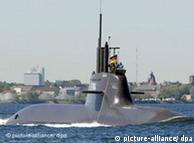
German submarine U34, Class 212Bildunterschrift: Großansicht des Bildes mit der Bildunterschrift: A German company is suspected of being involved in bribery

The probe is looking into allegations that Ferrostaal AG, one of the German companies helping to build the submarines, was involved in bribery. Ferrostaal executives are suspected by Munich prosecutors of authorizing payments worth millions of euros to politicians to win the initial deal in 2000 through a Greek company called Marine Industrial Enterprises.

According to records unearthed by the German investigation, Ferrostaal allegedly used false consulting contracts to cover up the bribes before distributing payments to "officials and decision-makers" in Greece. The prosecutors also allege that Ferrostaal accepted fees from other companies for bribes paid on their behalf, in effect operating a policy of subcontracted bribery.

While no charges have been brought in the on-going investigation into the submarine deal, several Ferrostaal executives stepped down in May and three company representatives have been indicted, along with individuals in Portugal linked to the Portuguese deals. The company itself could face fines in excess of 120 million euros if found guilty of bribing officials in Greece and Portugal.

Greece's economic crimes unit is also probing the transaction as part of its investigation into all weapons deals made by Athens over the past decade, deals said to be in the region of 16 billion euros in total, to determine whether Greece overpaid or agreed to deals for military equipment it didn't need.

Greece is the largest importer of conventional weapons in Europe and its military spending, the highest in the European Union, is widely accepted as one of the main reasons for the parlous state of its finances.

EU urged to clamp down on defence sector corruption

Angela Merkel Bildunterschrift: Großansicht des Bildes mit der Bildunterschrift: Merkel's government has denied exploiting Greece

The revelations and investigations in the deals between Germany, Greece and Portugal have also prompted members of the European Parliament to call for the EU to launch its own probe, with some officials accusing Germany of making their military dealings with Greece a condition for its involvement in the country's bailout and profiting from Athens' profligacy.

German government officials have vehemently denied that Germany took advantage of Greece's spending habits to land lucrative defense deals and have dismissed claims that its involvement in the rescue package, in which Germany was the largest EU contributor of financial aid, was dependent on agreements being signed.

"This is a very difficult matter," Dr. Christian Moelling, a European defense expert from the German Institute for International and Security Affairs, told Deutsche Welle. "If Greece wants to spend the money, then of course it can but at the moment it is spending EU money...or, in fact, mostly Germany's money."

"The problem is that this submarine deal is an old deal. It was signed in 2000 before Greece had this level of financial problems. As with any deal, it is very hard to get out of the contract and the private actors in this deal have every right to get their money."

As well as the submarine deals themselves, it is thought that "offset contracts" were also signed to the tune of one billion euros. Offsets are arrangements made by purchasing governments with their suppliers, requiring the contractors to reinvest a percentage of the value of the deal in the importing country.

Offset deals under scrutiny in addition to illegal payments

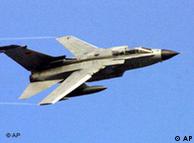
A German airforce Tornado Bildunterschrift: Großansicht des Bildes mit der Bildunterschrift: Buying military hardware sometimes comes with extras

"The arms trade is already an incubator of corruption with such large sums of money flowing around, and all that secrecy," Nick Whitney, a European defence expert at the European Council for Foreign Relations, told Deutsche Welle. "It's so easy to avoid clear accountability about what you've bought, and why. The best antidotes are transparency, and competition. But if you add offsets to the deal, it only gets murkier."

"The temptation to look for offsets - compensation for a big export of state capital - is understandable for some countries especially if you don't have an armaments industry of your own, and so can't expect to get compensated on a 'swings and roundabouts' basis."

Dr. Moelling describes offsets as side deals. "Direct offsets are deals which happen thus: the purchaser will say, for example, 'we want to buy your fighter aircraft but we also want you to provide us with the industrial capability to build the missiles which goes with it.' The seller will perhaps build the factory, pass on the technical knowledge or include the license to build the missiles in the deal for the plane."

"Indirect offsets work in much the same way but the additional deal will include something not attached to original product; we buy the plane, you build a hospital," he added. "These offsets often go beyond just the supplying company and can include participation by the supplier's government. In the case of the submarines, this would be the German government."

Grey area of EU defense sector open to abuse

Under many trade agreements and in most industries, offsets are illegal but the EU allows them in defense procurement where member states can invoke a "national security" exemption. Opponents of offset agreements say they are negotiated among companies with government favoritism and violate the EU's internal market competition rules.

Suitcase full of cashBildunterschrift: Großansicht des Bildes mit der Bildunterschrift: Defense deals within the EU are sweetened by offsets

"In the civilian field, offsets are illegal but in the defense sector, they are legal," Dr. Moelling added. "In the EU, article 346 of the current treaty says that any agreement can be overruled if it is claimed to be in the national security. The problem is that there are many different opinions on offsets in the EU. Germany says they are not helpful as they blur the actual price of products. Greece meanwhile has a very active offset policy while other countries have no official policy. Offests aren't part of any typical market so they're very hard to monitor and are highly politicized."

"The European defense agency recently brokered an agreement amongst European member states to limit offset to 100 percent of the value of the arms contract," Nick Witney said.

"Previously, many member states were looking for a lot more. Austria was the most striking case - they used to demand 300 percent offset. In such circumstances, weapon-buying becomes the least important part of the transaction - the big money is in the offset. So any pretence that you are buying the best weapon at the best price for your military needs goes out of the window - noone can really disentangle why you've bought what you've bought."

The EU has been called upon to tackle the "national security" exemption invoked by member states when dealing in offsets. The EU is planning to introduce a new "defense procurement directive" which will restrict the areas in which governments can use the exemption and demand that the offsets they are involved in are necessary for the protection of security interests and do not break competition rules.

"It's not only on the weapons side of the deal that competition gets distorted," Witney added. "If the arms seller agrees to buy 1,000 trucks from you in compensation, what's that done to all the rules of the single market about fair trade in trucks? The treaties make clear that, although 'national security' gives member states latitude to ignore single market rules in their arms purchases, they must not in doing so distort competition in non-military goods."


*Speaking Image - Creation of DTN News ~ Defense Technology News
*This article is being posted from Toronto, Canada By DTN News ~ Defense-Technology News

©

COPYRIGHT (C) DTN NEWS DEFENSE-TECHNOLOGY NEWS

DTN News - POSSIBILITY OF FUTURE CONFLICT NEWS: Iran To Punish Saudi Arabia Brutally

Asian Defense News: DTN News - POSSIBILITY OF FUTURE CONFLICT NEWS: Iran To Punish Saudi Arabia Brutally
(NSI News Source Info) TEHRAN, Iran - March 29, 2011: To suppress the revolution in Bahrain, the local king called on local troops from the neighboring Saudi Arabia. The British media that has its sources in the Bahraini royal family talked about such a possibility earlier. In particular, this was reported by the authoritative publication The Guardian.

Such a request was received by Riyadh on March 14, and he responded immediately. As stated earlier by the representatives of the ruling Saudi dynasty, they are ready to assist "the ruler and the people of the friendly country of Bahrain." Fortunately, it is allowed by the existing agreements on mutual support between the two countries, members of the Council on Cooperation in the Persian Gulf.

Yet, it is difficult to say who is considered the "people" by Saudi authorities since the anti-government rallies are attended not only by the representatives of the Shiite majority (70 percent of the population of Bahrain), but rather numerous representatives of the Left (including the Communists) from among the Sunnis.

The rallies in Bahrain have been ongoing for over a month. The Shiite majority actively opposes the oppression by the ruling Sunni minority, which includes Crown Prince Salman bin Hamad Al-Khalifa, who is especially zealous in insisting on foreign intervention.

The authorities of Bahrain demonstrate the inability to cope with the mass national protests involving tens of thousands of people. Not only men but also women participate in the rallies.

It is remarkable that the attempts of the authorities to calm the heat of protests by one-off cash handouts have failed. Then the king decided to influence those dissatisfied exclusively with a stick. The enforcement actions against the opposition gave only a temporary effect. On February 17, police with the assistance of the military defeated the opposition tent camp in the capital Manama. The opposition claimed that dozens of their supporters have been killed. However, the repressions could not calm down the popular discontent.

A few days ago the protest rallies in Bahrain have reached a new level. Fierce clashes have started between Sunnis and Shiites in educational institutions, including universities. The opposition has blocked the roads in the heart of Manama. Approximately a hundred opposition members and 14 police officers were injured in the ensuing clashes.

The situation for the ruling dynasty of Bahrain is complicated by the fact that the country has numerous opponents of the government from among the Sunnis, particularly among immigrant guest workers who conduct their protests, blocking the roads. Communist sentiments are particularly strong among them.

Every day it gets more difficult for the forces loyal to the king to deal with the rallies, and the cry for help to Saudi Arabia can be viewed as inability to deal with popular unrest.

Two weeks ago the media published reports about Saudi troops with 30 tanks entering Bahrain. However, there was no information that the troops were there to help the Bahraini king to subdue the popular uprising. In fact, the Saudi demonstrated support for the ruling regime in Manama.

Nonetheless, back on March 1 one of the leaders of the Shiite opposition, the head of the Haq movement Hasan Mushayma has threatened to seek help from Iran if the Saudi troops intervene in the affairs of Bahrain.

Two weeks later he repeated his promise. According to him, the Iranian army will have the right to support the Bahraini opposition if the Saudi troops suppress the people.

How serious are the words of Hassan Mushayma? On the one hand, the suppression of the co-religionists Shia by the regimes of the Persian Gulf in Tehran has always been perceived painfully. Particularly in Bahrain which has been virtually stolen from Iran by the British colonialists. On the other hand, will they deal with Riyadh who is under the protectorate of the U.S.?

To answer this question, we must consider that, according to the Bahraini authorities, Hassan Mushayma is "being fed from the hands of Iran." Maybe this statement is too intense. However, it is undeniable that the man who was intimidated by Manama took refuge in the Islamic Republic and had been living on its territory for a long time. His warning does not seem to be unfounded.

This is especially true because Iran has a great capacity to provide power impact on Saudi Arabia, including inflicting force on Riyadh. The most important instrument of Teheran is hundreds of thousands of rockets of small and medium-range that, if necessary, can create serious problems for oil production in Riyadh.

Perhaps, this is the reason why the CEO of the Center for the Study of Modern Iran Rajab Safarov said in an interview with Pravda.ru that "Iran would severely punish Saudi Arabia for a possible intervention in Bahrain. The Saudi and other monarchical regimes themselves are doing everything possible to ensure that popular unrest takes place.

First, people are tired of the oppressive power of individual clans represented by narrowly focused groups of people who do not express the interests of the people. Second, during its many years of ruling, the government monarchies of the Gulf have pushed away all the rest from power. This generates a righteous indignation of the active part of the population because they want to fight for power, influence and participate in decision making. Third, they are unhappy with an extremely high level of corruption in these countries generated by irremovable despotic power. Fourth, they protest against the dominance of the Americans imposing their culture and lifestyle that Islam does not accept by its nature. After all, the United States promote the cult of money and commercialism, cruelty and violence, permissiveness and complete debauchery, etc., everything that leads to the degradation of society.

Virtually and effectively the monarchical regimes of the Persian Gulf are the puppets and faithful servants of America and their vassals in the region. At one time one of these servants was the Shah of Iran, who was overthrown by the awakened people. The same thing is happening now in the Persian Gulf.

The tension surrounding Bahrain is pumped up by the West who clung to a recent statement by the official Iran that Bahraini territory at one time was one of the Iranian provinces. It served as a starting point for the absurd accusations against Tehran that it is supposedly conducting subversive activities. As for Hassan Mushayma, he indeed visited Iran. Yet, this does not mean that the latter is trying to destabilize the situation in Bahrain and the region as a whole. This is wrong and nobody can prove otherwise. Iran has never interfered in the internal affairs of other countries such as Bahrain.

However, this does not mean that he will sit idly if the Saudi troops start suppressing the uprisings in Manama. Tehran would perceive this as a rude forceful intervention in the affairs of Bahrain and the awakening of Islam. If the people of Bahrain ask for help, Iran may well be involved in protecting the region's peoples, including the people of Bahrain, repressed by the reactionaries from Saudi Arabia, who ask for permission from the U.S. for their every sneeze and that would never dare to interfere without their consent and assistance."

Disclaimer statement
Whilst every effort has been made to ensure the accuracy of the information supplied herein, DTN News ~ Defense-Technology News cannot be held responsible for any errors or omissions. Unless otherwise indicated, opinions expressed herein are those of the author of the page and do not necessarily represent the corporate views of DTN News ~ Defense-Technology News


*Speaking Image - Creation of DTN News ~ Defense Technology News
*This article is being posted from Toronto, Canada By DTN News ~ Defense-Technology News

©

COPYRIGHT (C) DTN NEWS DEFENSE-TECHNOLOGY NEWS


DTN News - DEFENSE NEWS: Libyan War Damages Russia's Economic Interests

Asian Defense News: DTN News - DEFENSE NEWS: Libyan War Damages Russia's Economic Interests
(NSI News Source Info) TORONTO, Canada - March 29, 2011: The events in Libya are impacting the economic interests of Russia. While Russian raw materials companies working in this country may still cherish the hope to participate in some projects, the loss of Rosoboronexport's contract with the Jamahiriya will amount to over $4 billion. In the event of the victory of the Western coalition the country's weapons mark
et will be closed for Russia.

With regard to the companies working directly on the territory of Libya, there are three most active Russian companies - Tatneft, Gazprom and the Russian Railways (RZD). Stroytransgaz has an office in the country as well.

Tatneft has been operating in the country for 6 years. The company received a concession to develop an oil block in the Ghadames (Unit 82-4) and won the rights to three oil blocks in the Sirte basin and Ghadames. The Russian company is involved in the projects under the production sharing agreement with Libya's National Oil Corporation (NOC). In 2009 alone it has invested $43 million in the projects.

In 2007, following an exchange of assets with BASF company, Gazprom acquired 49% in oil concessions C96 and C97. According to the memorandum of cooperation with the National Oil Corporation of Libya (NOC) signed in 2008, Gazprom could take part in the tenders for the development of fields, mentions RBC Daily.

The company won the right to conduct exploration in the licensed areas #19 and #64. In mid-February, Russia's gas monopoly announced the purchase of the shares from Italy's Eni in the Libyan oil project Elephant (16.5%) for $163 million. The force majeure will likely prevent this deal from happening.

However, the fate of Iraq and Lukoil suggest that the raw materials companies may be welcomed back, albeit on much worse terms. The Energy Minister Sergei Shmatko said that Russia was hoping to defend its economic interests in Libya, under any scenario in this country, The Moscow Post reports.

Since the opposition has failed to seize Libya right away, the forces behind the rebels have decided to legalize them and gave the rebels more or less official status. Post and telegraph are not very important in the current situation, so the Libyan oppositional National Transition Council has set up its own oil company (to replace the abovementioned NOC) and another nation's central bank, Bloomberg reports.

RZD has also contracted with Libya to build a 500-kilometer road Sirt - Benghazi, a modern high-speed (up to 250 mph) railway running along the Mediterranean coast and connecting major cities of the country. The project cost is 2.2 billion euros. To implement the project, a rail welding plant in Ras Lanuf has been launched.

With regard to the exports of the Russian arms, the head of Russian Technologies Chemezov estimated potential losses of $4 billion. However, Russia has only obtained this contract after it has cancelled the remaining Soviet-era state debt of Libya in the amount of $4.6 billion.


*Speaking Image - Creation of DTN News ~ Defense Technology News
*This article is being posted from Toronto, Canada By DTN News ~ Defense-Technology News

©

COPYRIGHT (C) DTN NEWS DEFENSE-TECHNOLOGY NEWS