Friday, May 18, 2012

DTN News - TECHNOLOGY NEWS: Facebook Stock ~ First-Day Of Trading Not For The Faint Of Heart

Asian Defense News: DTN News - TECHNOLOGY NEWS: Facebook Stock ~ First-Day Of Trading Not For The Faint Of Heart
(NSI News Source Info) TORONTO, Canada - May 18, 2012: Shorting the Facebook IPO on its first day of trading is not for the faint of heart, but some traders are trying.

As the hottest initial public offering in recent memory, Facebook has drawn 1990s-style tech-mania interest from mom and pop investors and big institutions alike.

That intense appeal means short-sellers are both attracted by the stock's high valuation and wary, at least for now.

"I have no interest in shorting a cultural phenomenon," hedge fund manager Jeffrey Matthews of Ram Partners in Greenwich, Connecticut, told Reuters in an email interview.

Asked if this was because such stocks trade without regard to normal market valuation, he wrote back, "Bingo."

Short sellers bet against shares by borrowing the security, then selling it. If the stock drops, they buy it back at the lower price, return it to the lender and pocket the difference as profit.

Shorts looking to bet against Facebook early face an uphill battle. Traders interviewed said the stock was going to be hard to borrow, at least for a few days, and only the best-sourced hedge fund managers will able to find lenders.

A prime broker at one of the top underwriters of the IPO said the firm would not be lending shares, at least until the initial settlement in three business days.

"I don't know how many shares will be available for shorting," said the broker, who requested anonymity. "We would only provide them once the deal has stabilized."

The bigger-than-usual percentage of retail-investor ownership of the shares may make shorting more difficult, as those investors don't tend to lend their shares for those who want to take a short bet.

"It will likely be difficult to get shares to borrow," said Adam Reed, professor of finance at UNC Kenan-Flagler Business School in Chapel Hill, North Carolina.

"In our research, we found that around 70 percent of IPOs are borrowable on the first day, but many of those names were only borrowable by well-placed investors."

Those who are able to short need nerves of steel. The borrowing cost will be high, and short-sellers may find the trade hard to unwind by buying back the stock in the open market, and could face a lender calling in their shorts if the stock rallies sharply.

Still, some are trying to short Facebook on Day One.

"I'm doing the legwork now and calling all the brokers," said a hedge fund manager late on Thursday, after Facebook priced its IPO at $38 per share. "Goldman and Credit Suisse are our prime brokers, so I am in contact with them about this."

"This is about as bubbly as you can get," he said. "My mother asked me if she could get Facebook shares and she has never been interested in IPOs before. A cab driver asked me about the IPO too. That's when you want to short it."

The hedge fund manager asked not to be named as he expected to be involved in shorting the stock on Friday.

At the $38-a-share IPO price, Facebook would trade at over 100 times historical earnings, versus Apple Inc's 14 times and Google Inc's 19 times.

Facebook shares traded at $41.06 in early-afternoon dealings on Friday, up about 8 percent.

Some hedge funds, remembering the heady days of the tech bubble in the late 1990s, have been sensing blood in the water in the recent flurry of social media and networking IPOs, including Groupon, LinkedIn, and Zygna .

Many believe those stocks' valuations are too high, given expectations for their growth and revenue outlook.

Some traders who can't short Facebook shares early may be betting against these other social media stocks instead, according to Max Wolff, a senior analyst at GreenCrest Capital.

Zynga shares plunged more than 13 percent in early trading on Friday and were down 5.7 percent in the afternoon. Groupon and Pandora Media were off at least 4 percent.

Zynga's social games currently account for more than 10 percent of Facebook revenue and profit, so traders may be focusing most on Zynga shares and options as an alternative to Facebook.

"Zynga options have high skew right now. That's the pricing difference between out-of-the-money puts and out-of-the-money calls," said Ralph Edwards, director, derivatives strategy at ITG. "This typically means people are looking for Facebook to kind of spill over to Zynga. If Facebook catches a cold then Zynga gets pneumonia."

Still, even among the skeptical, there is a good deal of caution in facing down a stampede of hopeful long investors. As economist John Maynard Keynes famously noted, the market can stay irrational longer than investors can stay solvent.

"Facebook is the kind of stock that, if you don't like it, you simply avoid it," said Mohannad Aama, managing director at Beam Capital Management LLC in New York.

© Copyright (c) The Vancouver Sun

MORE ON THIS STORY


FACEBOOK STOCK: FIRST-DAY OF TRADING NOT FOR THE FAINT OF HEART

Vancouver Sun - 
NEW YORK - Shorting the Facebook IPO on its first day of trading is not for the faint of heart, but some traders are trying. As the hottest initial public offering in recent memory, Facebook has drawn 1990s-style tech-mania interest from mom and pop ...

*Link for This article compiled by Roger Smith from reliable sources Vancouver Sun
*Speaking Image - Creation of DTN News ~ Defense Technology News 
*This article is being posted from Toronto, Canada By DTN News ~ Defense-Technology News Contact:dtnnews@ymail.com 
©COPYRIGHT (C) DTN NEWS DEFENSE-TECHNOLOGY NEWS

DTN News - RUSSIA DEFENSE NEWS: Russian AF To Get First T-50 Fighters In 2013

Asian Defense News: DTN News - RUSSIA DEFENSE NEWS: Russian AF To Get First T-50 Fighters In 2013
Source: DTN News - - This article compiled by Roger Smith from reliable sources Ria Novosti
(NSI News Source Info) TORONTO, Canada - May 18, 2012: The Russian Air Force will receive the first batch of prototypes of its fifth-generation T-50 fighter for performance testing in 2013, Col. Gen. Alexander Zelin said on Thursday.

The T-50, developed under the PAK FA program (Future Aviation System for Tactical Air Force) at the Sukhoi experimental design bureau, is Russia's first new major warplane designed since the fall of the Soviet Union.
“The work on the fifth-generation fighter is going according to schedule,” Zelin, a former Air Force commander, told a news conference in Voronezh (central Russia). “The third prototype has joined the testing program and the fourth is being built.”
The T-50 made its maiden flight in January 2010 and three prototypes have since been undergoing flight tests.
Zelin earlier said that the number of T-50 aircraft involved in testing would be increased to 14 by 2015.
The fighter was first shown to the public in August 2011, in Zhukovsky near Moscow, at the MAKS-2011 air show.
It has been decided to equip current fighter models with available thrust-vectoring engines. The first batch of upgraded fighters will be handed over to the Air Force by late 2020. It is also planned that all new T-50 fighters will have become operational by then.
“When a plane powered by a regular engine is taken to a wide angle of attack at low speeds, it loses control and stability and starts moving independently of the pilot’s commands, i.e. the plane moves randomly. The Su-35 has perfect controllability at any speed, even at negative speeds, for instance, when the plane drops tail-forward. The pilot can effectively put the plane in any angular position,” Sergei Bogdan, a Su-35 and T-50 test pilot, explained to Izvestiya.
The world’s first thrust-vectoring engine appeared in the export version of the Su-30 meant for India. The first contract for the delivery of such planes was signed more than 10 years ago. India currently operates 150 Su-30 aircrafts and plans to contract the delivery of another 100 machines. Furthermore, Russia supplies Su-30 models powered by these engines to Malaysia and Algeria.

Related Review

The maiden flight of the T-50 / Project 701 / PAK FA, the first Russian fifth-generation fighter jet was completed successfully on Friday morning, 29 January 2010 at Komsomol'sk-na-Amur. This event is signfincant for several reasons.
  1. The PAK FA is generally similar in appearance to the American F-22, though there are so many differences in detail that it is clearly an original design rather than a knock-off copy. A direct comparison with the F-22 is probably not meaningful on an unclassified basis, but Russian marketers will probably sell it as roughly equivalent in combat potential. While the F-35 is also a fifth generation stealth fighter, the low observable characteristics of this attack aircraft are said to be markedly inferior to the all-around stealth of the F-22 air supremacy fighter.
  2. As of January 2010 a total production run of at least 150-200 aircraft for the Russian Air Force and 200 aircraft for the Indian Air Force was envisioned. If these production objectives are met, the United States might wind up with the world's third largest fleet of stealth fighters, after India and Russia.
  3. In June 2001, India was offered 'joint development and production' of this new 5th generation fighter by Russia. Russia had been trying to sell this concept both to China and India for some time. It seems probable that China declined to participate in this project given a belief that Russia stood to gain more from Chinese participation than did China. That is, it would seem that China had determined that it could produce a superior product without Russian help. With the first flight of the Russian stealth fighter in 2010, an arguably superior Chinese steath fighter might be expected to take to the skies not too long thereafter.
  4. The prospect that a country like Iran might buy even a few dozen PAK FA aircraft from Russia may well awaken interest in the F-22 in Israel, if not Saudi Arabia. The emergence of a Chinese counterpart stealth fighter may also re-awaken Japanese interest in the F-22. Production of large numbers of PAK FA by India would place Pakistan in a rather difficult position, unless it purchased similar numbers of stealth fighters from China.

Related News

Multimedia


*Link for This article compiled by Roger Smith from reliable sources Ria Novosti
*Speaking Image - Creation of DTN News ~ Defense Technology News 
*This article is being posted from Toronto, Canada By DTN News ~ Defense-Technology News Contact:dtnnews@ymail.com 
©COPYRIGHT (C) DTN NEWS DEFENSE-TECHNOLOGY NEWS 

Thursday, May 17, 2012

DTN News - ISRAELI DEFENSE NEWS: Stealth Yansh - The Israeli Top Secret Radar-Evading Chopper Used To Drop Spies In Iran

Asian Defense News: DTN News - ISRAELI DEFENSE NEWS: Stealth Yansh - The Israeli Top Secret Radar-Evading Chopper Used To Drop Spies In Iran
Source: DTN News - - This article compiled by Roger Smith from reliable sources Posted by David Cenciotti in Stealth Black Hawk
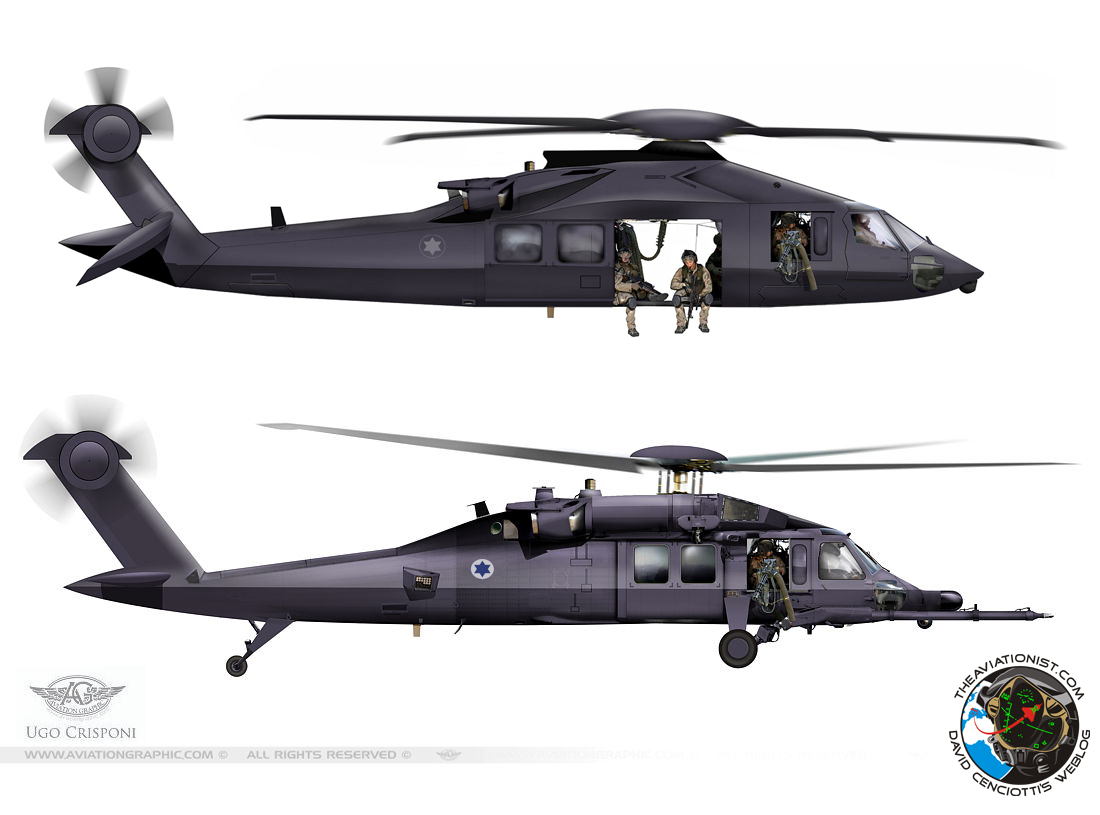
(NSI News Source Info) TORONTO, Canada - May 17, 2012: According to F. Michael Maloof, a former Pentagon senior policy analyst the Israeli Air Force is equipped with the same Stealth Black Hawk helicopter used by the U.S. Navy SEALs to kill Osama Bin Laden last year.


Believed to be an exclusive U.S. “black project”, the radar-evading chopper (most probably a quiet one, rather than an actual helicopter invisible to radars), such helos would be used by the IAF to drop Iranian dissidents into Iran to gather intelligence on the Tehran’s nuclear program, according to a report written by Maloof for G2 bulletin, a global intelligence newsletter.
This is the first time someone reports about radar-evading choppers in the hands of Israel.
Even if it’s quite unlikely that the Washington shared the secrets of its most advanced helicopter with Jerusalem, considered that the American Stealth Hawk is probably based on 1978 study freely available on the Internet, we can’t rule out the possibility that the Israeli industry has found a way to modify the IAF Black Hawks (nicknamed “Yanshuf”, English for “Owl”) to make them stealthy.
Provided a Stealth Yanshuf really exists, this is what it would look like in two updated versions of the renderings I conceived with AviationGraphic.com‘s Ugo Crisponi: above, the famous highly modified version with retractable landing gear MH-X (please remember this is not the actual designation), whose shape reminds the one of an S-76; below, the more likely slightly-modified Stealth Black Hawk (described here).

*Link for This article compiled by Roger Smith from reliable sources Posted by David Cenciotti in Stealth Black Hawk
*Speaking Image - Creation of DTN News ~ Defense Technology News 
*This article is being posted from Toronto, Canada By DTN News ~ Defense-Technology News Contact:dtnnews@ymail.com 
©COPYRIGHT (C) DTN NEWS DEFENSE-TECHNOLOGY NEWS 

DTN News - CHINA DEFENSE NEWS: China Flies New Stealth Fighter As Problems Plague U.S. Jets

Asian Defense News: DTN News - CHINA DEFENSE NEWS: China Flies New Stealth Fighter As Problems Plague U.S. Jets
Source: DTN News - - This article compiled by Roger Smith from reliable sources By David Axe - Wired
(NSI News Source Info) TORONTO, Canada - May 17, 2012: The second copy of China’s stealth fighter prototype has just flown at a research facility in the city of Chengdu. The first flight of the J-20 Mighty Dragon with the nose number 2002 doubles Beijing’s stealth test fleet at a time when America’s latest jet fighters are hobbled by cost overruns, labor disputes and lethal design flaws. But it’s far from certain how much, and how fast, the new Chinese jet will alter the military balance.

The challenges for American stealth developers are clear. It has come to light that Lockheed’s F-22 Raptor — the first of the current generation of stealth fighters — is steadily poisoning its pilots owing to a faulty oxygen system. Meanwhile, the F-35 has been delayed by several years and the overall cost to design and build thousands of the new jets has risen by hundreds of billions of dollars. To make matters worse, workers at Lockheed’s F-35 factory have gone on strike, with no end in sight.


At first glance, China appears to be making huge progress where the U.S. falters. The twin-engine Mighty Dragon 2002, painted black like its predecessor, made its first appearance in April in photos snapped by Chinese bloggers (who may or may not be on Beijing’s payroll). The second J-20 spent a month or so performing ground tests before launching on its inaugural test sortie sometime in the past few days. If the initial flight of the first Mighty Dragon (nose number 2001) in December 2010 is any indication, 2002′s debut mission amounted to little more than a lap around the Chengdu airfield to test the aircraft’s basic functions and show off for the aforementioned bloggers.
With two airframes to work with, the Chengdu engineers can now double the roughly five-flights-a-month development program apparently aimed at producing a front-line stealth warplane. Before the first Mighty Dragon ever flew, General He Weirong of the Chinese People’s Liberation Army Air Force said the J-20 would enter service between 2017 and 2019. Then-U.S. Secretary of Defense Robert Gates countered, saying it would be 2020 or later before China possessed a combat-ready stealth fighter. It’s unclear who’s right — or even what definition of front-line service either man was using.
Certainly, the Mighty Dragon’s engineers have a lot of work ahead of them. For comparison, the development program for the U.S. military’s latest F-35 Joint Strike Fighter includes more than 10,000 test flights spread over 15 years. If China duplicated the American testing profile, it could take decadesfor the J-20 to complete development.
But China traditionally does not take the same approach to warplane testing that America does. Instead, China follows the Russian model: some basic tests after which small numbers of new jets with rudimentary combat capabilities are handed over to a regular fighter squadron. After a few years of real-world use, engineers build a second batch with improved capabilities, and so on.
In that way China usually builds its aerial arsenal in small increments in parallel with testing. On the upside, new designs can enter service faster than they do in America. The downside is that the new fighters often fly with undetected flaws. The U.S. initially tried that “concurrent” approach with the Lockheed Martin-built F-35, only to scale back early production after testers discovered design flaws costing billions of dollars to fix. The J-20 could encounter the same problem.
Moreover, it seems both J-20s are still flying with Russian-made AL-31 engines rather than motors specifically designed for the J-20′s huge size and apparent weight. China has had so many problems inventing its own jet engines that it has revived imports of Russian models. Finalizing advanced avionics, sensors and weapons could prove equally difficult for the Chengdu developers.
All the same, Mighty Dragon 2002 does appear to be a step towards an early combat capability. It features several apparent improvements over its sister Mighty Dragon 2001, including stockier landing gear and a redesigned nose that could house an ultra-modern electronically scanned radar. If Beijing chooses to build a squadron of J-20s for early front-line use, they could look a lot like jet number 2002.
That said, there are signs China is cooling its stealth-fighter ambitions. Until recently, analysts had predicted the J-20 would be joined by several other brand-new Chinese stealth fighter designs, including one code-named J-16. But this spring reporters got their first look at the J-16. Turns out it’s a bolt-for-bolt copy of the Russian Su-30, a decidedly non-stealthy design.
That should prove comforting to American warplane developers who are in the throes of parallel crises involving the F-22 and F-35. Which is to say, China’s stealth fighter development is faring no better and no worse than America’s. For every big step forward there are little steps back.

*Link for This article compiled by Roger Smith from reliable sources By David Axe - Wired
*Speaking Image - Creation of DTN News ~ Defense Technology News 
*This article is being posted from Toronto, Canada By DTN News ~ Defense-Technology News Contact:dtnnews@ymail.com 
©COPYRIGHT (C) DTN NEWS DEFENSE-TECHNOLOGY NEWS 

DTN News - TECHNOLOGY NEWS: How Facebook Took Over The Web

Asian Defense News: DTN News - TECHNOLOGY NEWS: How Facebook Took Over The Web
*New data from Nielsen reveals how Facebook grew to become the dominant social network it is today.
Source: DTN News - - This article compiled by Roger Smith from reliable sources By Lance Whitney - Cnet News
(NSI News Source Info) TORONTO, Canada - May 17, 2012: Facebook is on its way to 1 billion users with an IPO around the corner. Not bad for a company with its roots in a Harvard dorm room.

But how did it achieve its grip on the global market? New findings from Nielsen offer a peek into some key milestones for the social network.

Facebook's user base currently numbers more than 900 million. But it's also one of the most visited Web sites in the world, according to Nielsen.
The site received around 152 million unique visits from people in the U.S. in March, which means that more than two out of three online Americans checked out Facebook that month. In such countries as Brazil, Italy, and New Zealand, the rate is even higher.
Facebook first grabbed 10 million unique U.S. visitors in November 2006 and 10 million unique U.K. visitors in April 2008. The site captured 10 million unique visitors in France, Germany, and Spain in 2009, Nielsen said.
In August of last year, Facebook surpassed Orkut as the top social network in Brazil and has continued to grab more users in the country since then. MySpace was also once a hot social network. But in January 2009, Facebook officially surpassed MySpace at the top social network and has held that title since.
Facebook is currently ranked top among all social networking and blog sites in 11 of 12 major countries around the world. The following table from Nielsen shows Facebook's reach in those 12 countries.
(Credit: Nielsen)
Of course, not everyone is a fan of the giant social network.
Half of the 1,000 Americans recently polled by the AP and CNBC believe Facebook is a fad. General Motors revealed this week that it was yanking its advertising on the network because it didn't think the ads were effective.
Concerns have also been raised about the company's move to go public. Half of the people in the AP-CNBC poll think the initial offering price is too high. Many also question whether CEO Mark Zuckerberg has the skills to manage and expand a large publicly-traded company.
And the company has consistently gotten into deep water over privacy issues, angering users and advocacy groups.
Only 13 percent of the people polled by AP and CNBC trust Facebook "completely" or "a lot" to keep their personal information private. More than half (59 percent) said they have little or no faith in the company to protect their privacy.
Facebook has made tremendous strides since its birth in 2004. But the company will face more challenges ahead as it strives to grow both as a social network and a public corporation.


FEATURED POSTS


*Link for This article compiled by Roger Smith from reliable sources By Lance Whitney - Cnet News
*Speaking Image - Creation of DTN News ~ Defense Technology News 
*This article is being posted from Toronto, Canada By DTN News ~ Defense-Technology News Contact:dtnnews@ymail.com 
©COPYRIGHT (C) DTN NEWS DEFENSE-TECHNOLOGY NEWS